
Natural daylight can make a remarkable difference in how a home looks and feels. Bright interiors often appear more welcoming, spacious, and comfortable, while darker areas may feel enclosed even when the rest of the home receives plenty of sunlight.
For many homeowners in Orléans, Ottawa, certain rooms simply do not have convenient access to exterior windows. Interior hallways, bathrooms, walk-in closets, laundry rooms, and stairwells can remain dark throughout the day.
Installing a traditional window may not be practical in these spaces, particularly when the room is surrounded by other parts of the house.
This is where Sun Tunnel installation can provide an effective daylighting solution.
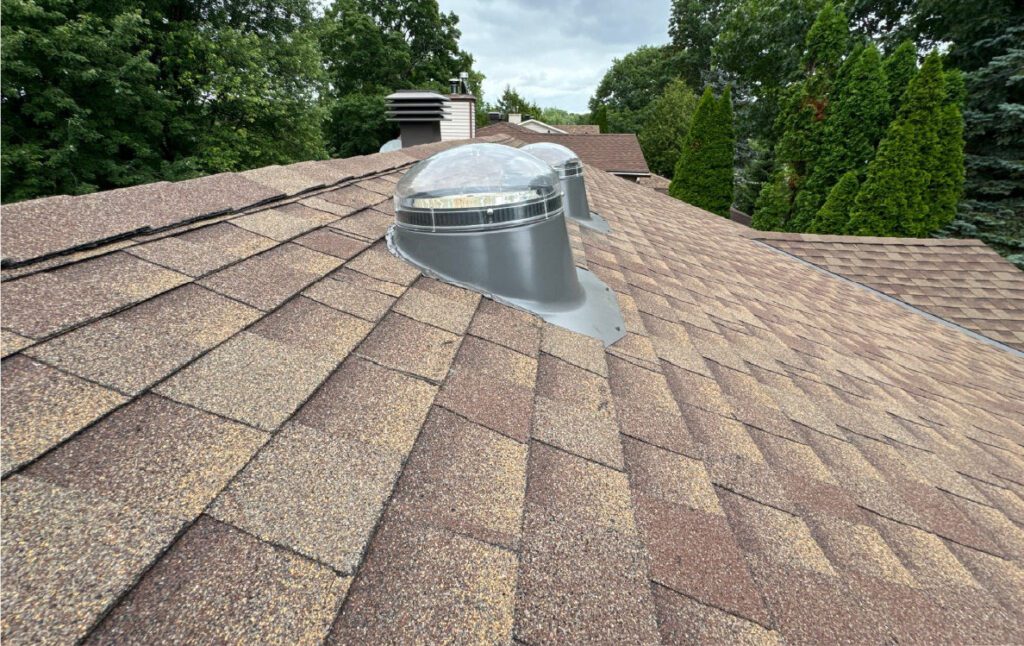
Sun Tunnels capture natural daylight through a roof-mounted collector and direct it through a highly reflective tube to a ceiling diffuser inside the home. This allows daylight to reach interior spaces without requiring a large skylight opening.
However, the amount of daylight a Sun Tunnel delivers depends on several factors, including roof location, orientation, surrounding obstructions, tube configuration, and installation quality.
Choosing the correct roof position is therefore one of the most important decisions in the installation process.
At Sunrise Skylights, we help homeowners in Orléans and the surrounding Ottawa area explore natural daylighting solutions while considering roofing conditions, attic construction, and long-term weather protection.
What Is a Sun Tunnel?
A Sun Tunnel is a tubular daylighting system designed to bring natural light into interior spaces.
Unlike a traditional skylight, which creates a larger opening directly above the room, a Sun Tunnel uses a reflective tube to transport daylight from the roof to the ceiling below.
A typical system includes three main components.
Roof-Mounted Daylight Collector
The exterior collector is installed on the roof and captures available daylight.
Its design depends on the product and roof application.
Reflective Tube
A reflective tube transfers captured daylight through the attic or roof space.
The tube may be rigid or flexible, depending on the installation.
Interior Ceiling Diffuser
The diffuser distributes the collected daylight into the room.
It provides a finished appearance at the ceiling while helping spread light throughout the space.
Together, these components allow daylight to reach areas that would otherwise depend primarily on electric lighting.
Why Sun Tunnels Are Popular in Orléans Homes
Many homes in Orléans have interior layouts that include rooms without direct access to exterior walls.
These spaces may include:
- Windowless bathrooms
- Interior hallways
- Walk-in closets
- Laundry rooms
- Stairwells
- Pantries
- Interior entryways
Even homes with large windows can have darker areas in the centre of the floor plan.
Sun Tunnels provide an opportunity to introduce daylight without major changes to the home’s exterior walls.
They can also be suitable for homeowners who want a smaller roof opening than a conventional skylight would require.
Why Roof Location Matters for Sun Tunnel Performance
A Sun Tunnel’s roof collector determines how much daylight enters the system.
If the collector is positioned where surrounding structures or trees frequently block daylight, the amount reaching the room may be reduced.
Likewise, a collector installed in a location that requires a long, complicated tube route may deliver less light than one connected through a shorter, more direct path.
The ideal roof location balances several considerations:
- Available daylight
- Roof orientation
- Roof pitch
- Nearby obstructions
- Tube length
- Attic framing
- Roof condition
- Interior ceiling location
- Manufacturer installation requirements
The brightest roof location is not always the best installation location if it creates structural or roofing complications.
1. Consider the Direction Your Roof Faces
Roof orientation influences how sunlight reaches the collector throughout the day.
In Orléans, different roof surfaces receive varying amounts of direct sunlight depending on the season and time of day.
South-Facing Roofs
South-facing roof areas often receive substantial sunlight during the day in Ottawa’s northern-hemisphere climate.
These locations may provide strong daylight opportunities when they are not shaded.
However, direct sunlight is not the only source of light for a Sun Tunnel.
East-Facing Roofs
East-facing roof surfaces generally receive more direct morning sunlight.
They may be worth considering for rooms used primarily in the morning.
West-Facing Roofs
West-facing roof surfaces tend to receive more direct sunlight later in the day.
These locations may be suitable for certain afternoon-use spaces.
North-Facing Roofs
North-facing roof areas generally receive less direct sunlight.
However, they can still collect diffuse daylight from the sky.
The amount of light delivered depends on the specific collector design, roof conditions, and surrounding obstructions.
The best orientation should be determined through an assessment of the actual roof rather than choosing a direction alone.
2. Look for Roof Areas With Minimal Shade
Shade can significantly affect the amount of daylight reaching a Sun Tunnel collector.
Common sources of shading include:
- Mature trees
- Nearby houses
- Chimneys
- Dormers
- Higher roof sections
- Other rooftop structures
A roof location that appears bright at noon may be shaded during the morning or afternoon.
Seasonal changes also matter.
For example, deciduous trees may create considerable shade during summer while allowing more daylight through after their leaves fall.
Homeowners should consider how shading changes throughout the day and year.
3. Choose a Roof Location With a Practical Tube Route
One of the most important installation considerations is the path between the roof collector and the interior diffuser.
Sun Tunnels use reflective tubing to transport daylight.
Generally, a shorter and more direct route can reduce light losses compared with a longer route containing multiple bends.
However, the actual performance depends on the product’s reflective properties, tube diameter, collector, diffuser, and installation details.
The tube route should be evaluated before the roof opening is selected.
Why Tube Length Affects Daylight Delivery
As daylight travels through a reflective tube, some light is lost through repeated reflections.
Longer tubes may involve more reflections before the light reaches the diffuser.
This can reduce the amount of daylight delivered.
For that reason, installers typically look for an efficient route between the roof and the room.
A shorter route is often preferable, provided it is compatible with the roof structure and installation requirements.
4. Minimize Unnecessary Bends
Sometimes the roof collector cannot be positioned directly above the ceiling diffuser.
In these situations, the tube may need to change direction.
Certain Sun Tunnel systems allow adjustable elbows or flexible sections to accommodate the route.
However, excessive bends can reduce light transmission.
A carefully planned installation should minimize unnecessary directional changes while avoiding structural obstacles.
5. Understand Rigid vs. Flexible Sun Tunnel Tubes
VELUX offers different tubular daylighting configurations for suitable applications.
The appropriate option depends on the roof and attic layout.
Rigid Sun Tunnel Tubes
Rigid tubes have highly reflective interior surfaces.
They are often useful where a relatively direct route can be established.
Potential advantages include efficient daylight transmission and a structured installation path.
Flexible Sun Tunnel Tubes
Flexible tubes can accommodate certain obstacles or more complicated installation routes.
They may be suitable where rigid tubing is impractical.
However, flexible configurations can have different light-transmission characteristics.
The best option depends on the installation conditions and manufacturer’s specifications.
6. Check the Attic Before Selecting the Roof Position
A Sun Tunnel installation involves more than the visible roof surface.
The space beneath the roof must also be evaluated.
An attic may contain:
- Roof trusses
- Rafters
- Ceiling joists
- Plumbing vents
- Electrical wiring
- Ductwork
- Insulation
- Ventilation components
These elements can affect the available tube route.
A roof location that appears ideal from outside may require substantial changes to avoid hidden obstacles.
This is why a professional attic assessment is important.
Why Roof Trusses Should Not Be Modified Without Engineering
Many homes in Orléans use engineered roof trusses.
These structural components are designed to support roof loads.
Cutting or modifying a truss without an appropriate engineered design can compromise structural performance.
A Sun Tunnel installation should be planned around existing framing whenever practical.
If structural modifications are necessary, they must be evaluated and completed according to applicable requirements.
7. Choose the Interior Diffuser Location Carefully
The ceiling diffuser determines where daylight enters the room.
Its location should be selected based on the room’s layout and intended use.
For example, a diffuser positioned near the centre of a hallway may distribute daylight more effectively across the space than one placed in an isolated corner.
In a bathroom, the location should complement the room’s lighting needs and avoid conflicts with existing fixtures.
The diffuser location should also allow a practical connection to the roof collector.
Sun Tunnel Placement for Bathrooms in Orléans
Windowless bathrooms are common candidates for Sun Tunnel installation.
Natural daylight can make a bathroom feel brighter and more welcoming without reducing privacy.
When planning the installation, consider:
- Ceiling layout
- Vanity location
- Shower position
- Existing light fixtures
- Exhaust fan placement
- Attic accessibility
The diffuser should provide useful illumination without interfering with ventilation or other ceiling components.
A Sun Tunnel provides daylight, but it does not replace a bathroom exhaust fan.
Sun Tunnel Placement for Hallways
Interior hallways often receive limited daylight because they are surrounded by other rooms.
A Sun Tunnel can help brighten these spaces during daylight hours.
For longer hallways, one diffuser may not illuminate the entire area evenly.
Depending on the layout and lighting goals, multiple daylighting locations may be worth evaluating.
The final arrangement should consider the available roof area and tube routing.
Sun Tunnel Placement for Walk-In Closets
Walk-in closets often rely entirely on electric lighting.
A Sun Tunnel can introduce natural daylight, making the space more pleasant during the day.
However, homeowners should consider the placement of shelving and storage systems.
A diffuser should be positioned where it can distribute light effectively rather than being obstructed by tall cabinetry.
Sunlight exposure and potential fading of sensitive fabrics should also be considered when selecting daylighting products and storage layouts.
Sun Tunnel Placement for Laundry Rooms
Laundry rooms can benefit from additional daylight, especially when located in interior sections of the home.
Natural light may make it easier to see clothing, surfaces, and work areas.
When choosing the diffuser location, consider:
- Cabinets
- Appliances
- Ceiling fixtures
- Ventilation ducts
- Available attic space
The objective is to introduce useful daylight without interfering with existing equipment.
8. Evaluate the Roof Pitch
Roof pitch is an important factor in Sun Tunnel installation.
Different roof slopes may require different flashing configurations or product selections.
The selected system must be compatible with the roof pitch and roofing material.
A professional installer should verify the manufacturer’s installation requirements before creating the roof opening.
9. Consider the Roofing Material
Many Orléans homes have asphalt shingle roofs.
Other homes may use different roofing materials.
Sun Tunnel collectors must be integrated with a compatible flashing system designed for the roof application.
Proper flashing helps direct rainwater and melting snow around the roof opening.
An installation that relies only on exposed sealant rather than an appropriate flashing system may be more vulnerable to weather-related problems.
Why Flashing Is Essential for Ottawa Weather
Ottawa’s climate places significant demands on roof penetrations.
During winter, snow can accumulate around roof-mounted components.
During spring, melting snow and rainfall create substantial water movement across the roof.
Proper flashing helps direct this water away from the Sun Tunnel opening.
The installation should also include appropriate underlayment and roofing integration according to the product’s requirements.
10. Inspect the Roof Before Installation
Before installing a Sun Tunnel, homeowners should evaluate the condition of the surrounding roof.
Potential concerns include:
- Damaged shingles
- Deteriorated flashing
- Soft roof decking
- Previous leaks
- Aging underlayment
- Structural damage
If the roof is already nearing the end of its useful life, it may be practical to coordinate Sun Tunnel installation with planned roofing work.
This can reduce the need to disturb the same roof area during separate projects.
Should You Install a Sun Tunnel During Roof Replacement?
Roof replacement can be a convenient time to add a Sun Tunnel.
With roofing materials already being removed, installers may have improved access to the roof deck.
The collector and flashing can then be integrated with the new roofing system.
However, Sun Tunnels can also be installed on suitable existing roofs.
The decision depends on roof condition, project timing, and installation requirements.
11. Consider Ottawa’s Winter Sunlight
Sunlight conditions change significantly throughout the year.
During winter, Ottawa experiences shorter daylight hours and a lower sun angle.
Snow accumulation, cloud cover, and surrounding shade can also affect daylight availability.
A Sun Tunnel will not deliver the same amount of light at every time of day or in every season.
However, it can continue collecting available daylight, including diffuse light under many overcast conditions.
The amount reaching the room depends on the collector and tube configuration.
Can Snow Affect Sun Tunnel Performance?
Yes.
Snow accumulation over the roof collector can temporarily reduce or block daylight.
The extent of this effect depends on roof conditions, snow depth, weather, and collector design.
Sun Tunnels should be installed according to manufacturer requirements for the applicable roof and climate conditions.
Homeowners should not climb onto an icy or snow-covered roof to clear a collector.
If snow-related performance concerns persist, a professional can assess the installation.
12. Avoid Locations That Interfere With Roof Drainage
Roof drainage patterns should be considered when selecting the collector location.
Some roof areas experience concentrated water movement.
Examples include locations near valleys or below higher roof sections.
The installer should select a position that meets product requirements and allows proper water management.
The goal is to integrate the Sun Tunnel into the roof without creating unnecessary drainage complications.
13. Protect Attic Insulation During Installation
Installing a Sun Tunnel may require moving insulation to access the ceiling opening and tube route.
After installation, disturbed insulation should be properly restored.
The ceiling penetration and tube assembly should also be addressed according to the manufacturer’s air-sealing and insulation requirements.
Poorly detailed openings can create unwanted air movement between the living space and attic.
Why Air Sealing Matters Around Sun Tunnels
Warm indoor air can carry moisture.
If air escapes through gaps around a ceiling penetration, it may enter the colder attic.
Under certain conditions, moisture can condense on cold surfaces.
Proper air sealing helps reduce uncontrolled airflow around the installation.
This is particularly important during Ottawa’s winter months.
Why Condensation Control Matters
Condensation can develop when warm, humid air contacts sufficiently cold surfaces.
A Sun Tunnel installation should account for the surrounding attic environment and the product’s insulation and sealing requirements.
Potential contributing factors include:
- High indoor humidity
- Air leakage
- Cold surfaces
- Inadequate insulation details
- Improper installation
A professional installation should address these factors where applicable.
14. Keep Attic Ventilation Pathways Clear
Sun Tunnel tubing should not unnecessarily obstruct existing attic ventilation pathways.
In conventional vented attics, soffit vents commonly provide intake airflow while higher roof vents provide exhaust.
The installation should preserve the intended ventilation arrangement.
If insulation or ductwork must be adjusted, the final configuration should maintain appropriate clearances and airflow.
How Much Natural Light Can a Sun Tunnel Provide?
The amount of daylight delivered varies by installation.
Important factors include:
- Collector size
- Collector design
- Roof orientation
- Shading
- Tube diameter
- Tube length
- Number of bends
- Reflective properties
- Weather conditions
- Time of day
Because these variables differ from home to home, homeowners should avoid assuming that every Sun Tunnel will produce identical results.
A professional assessment can help establish realistic expectations.
Does a Larger Sun Tunnel Provide More Light?
Larger-diameter systems may collect and deliver more daylight under comparable conditions.
However, the actual result depends on the complete installation.
A larger collector with a long, complicated tube route may not always outperform a smaller system with a more efficient route.
The right size should be selected based on the room, roof configuration, and product specifications.
Can You Install Multiple Sun Tunnels?
Yes, multiple Sun Tunnels may be suitable for certain homes.
For example, homeowners may want daylight in both a hallway and an interior bathroom.
Each installation requires an appropriate roof location and tube route.
The roof structure, spacing, flashing requirements, and interior layout must all be considered.
Sun Tunnels vs. Traditional Skylights
Both systems bring natural daylight into the home, but they serve different purposes.
| Feature | Sun Tunnel | Traditional Skylight |
|---|---|---|
| Main purpose | Deliver daylight through reflective tubing | Provide daylight through a roof window |
| Roof opening | Generally smaller | Generally larger |
| Direct view of the sky | No | Yes |
| Interior placement | Can reach rooms away from roof opening | Usually requires a direct opening or shaft |
| Ventilation | Generally not provided | Available with venting models |
| Typical applications | Hallways, closets, bathrooms | Bedrooms, kitchens, living rooms |
The best option depends on the homeowner’s goals and the building configuration.
Can Sun Tunnels Reduce the Need for Electric Lighting?
Sun Tunnels can reduce reliance on electric lighting during periods when sufficient natural daylight is available.
For example, an interior hallway that previously required lights during the day may become bright enough for certain activities without switching them on.
However, the actual reduction in electricity use depends on:
- Daylight availability
- Room usage
- Lighting habits
- Installation performance
- Existing lighting efficiency
Sun Tunnels do not eliminate the need for electric lighting at night or during periods of insufficient daylight.
What About Solar Night Lights?
Some tubular daylighting systems offer compatible accessories designed to provide limited illumination after dark.
Depending on the product, solar-powered night-light features may be available.
These accessories are separate from the daylight collection function.
Homeowners interested in nighttime illumination should confirm compatibility with the selected Sun Tunnel model.
How Long Does Sun Tunnel Installation Take?
Installation time depends on the roof configuration and complexity of the tube route.
Factors that may affect the project include:
- Roof accessibility
- Roofing material
- Attic access
- Tube length
- Structural obstacles
- Ceiling construction
- Interior finishing requirements
A straightforward installation may require less work than one involving complicated attic routing or modifications.
The installer can provide a more accurate timeline after inspecting the property.
Common Sun Tunnel Installation Mistakes to Avoid
Choosing the Roof Location Without Checking the Attic
A roof position may look ideal from outside but be blocked by framing or mechanical systems.
Using an Unnecessarily Long Tube Route
Longer routes can reduce light transmission.
Adding Too Many Bends
Excessive directional changes may affect daylight delivery.
Ignoring Roof Shade
Nearby trees or structures can reduce available daylight.
Using Incompatible Flashing
The flashing must be suitable for the product, roof pitch, and roofing material.
Forgetting Air Sealing
Ceiling penetrations should be properly sealed according to the installation requirements.
Blocking Attic Ventilation
The installation should preserve necessary airflow pathways.
Installing on a Deteriorated Roof
Existing roofing problems should be addressed before or during installation.
Why Professional Sun Tunnel Installation Matters
A Sun Tunnel may appear simple from inside the home, but installing one involves multiple building components.
The project may require:
- Roof assessment
- Attic inspection
- Tube-route planning
- Roof opening preparation
- Collector installation
- Flashing integration
- Tube assembly
- Ceiling diffuser installation
- Air sealing
- Insulation restoration
Each stage contributes to the performance of the completed system.
A professional approach helps ensure that daylighting improvements do not compromise the surrounding roof assembly.
A Typical Sun Tunnel Installation Process
Step 1: Evaluate the Interior Room
The installer identifies the intended diffuser location based on room layout and lighting goals.
Step 2: Inspect the Attic
The available space is checked for framing, ducts, wiring, and other obstacles.
Step 3: Select the Roof Collector Location
The roof position is evaluated for daylight availability, structural compatibility, drainage, and tube routing.
Step 4: Choose the Appropriate Product
The installer selects a compatible Sun Tunnel model, tube configuration, and flashing system.
Step 5: Prepare the Roof Opening
The opening is created according to the product’s installation requirements.
Step 6: Install the Collector and Flashing
The roof-mounted components are integrated with the surrounding roofing system.
Step 7: Connect the Reflective Tube
The tube is routed between the collector and interior diffuser.
Step 8: Install the Ceiling Diffuser
The diffuser is fitted to provide a finished interior appearance.
Step 9: Complete Final Checks
The installation is inspected, and any disturbed insulation or interior finishes are addressed as required.
When Is the Best Time to Install a Sun Tunnel in Orléans?
Sun Tunnel installation can be planned during suitable weather conditions.
Spring, summer, and fall often provide convenient opportunities for roof-related work.
However, the best timing depends on:
- Roof condition
- Weather
- Contractor availability
- Home renovation plans
- Roofing replacement schedules
Homeowners planning a larger renovation may find it practical to coordinate Sun Tunnel installation with other work.
Frequently Asked Questions About Sun Tunnel Installation in Orléans
1. What is the best roof direction for a Sun Tunnel?
The best direction depends on daylight availability, shading, roof design, and the tube route. South-facing roofs can offer strong daylight opportunities, but other orientations may also work well.
2. Do Sun Tunnels work on cloudy days?
Yes. Sun Tunnels can collect diffuse daylight, although the amount delivered is generally lower when outdoor light levels are reduced.
3. Can a Sun Tunnel be installed in a windowless bathroom?
Yes. Windowless bathrooms are common applications, provided a suitable roof and tube route are available.
4. Do Sun Tunnels require a direct path from the roof to the ceiling?
Not always. Some systems allow bends or flexible tubing, but a shorter and more direct route is generally preferable for light transmission.
5. Are Sun Tunnels suitable for Ottawa winters?
Products designed and installed for the applicable roofing conditions can be used in Ottawa-area homes. Snow cover may temporarily affect daylight collection.
6. Can a Sun Tunnel cause roof leaks?
Any roof penetration requires proper weatherproofing. Correct flashing, underlayment, and roofing integration are essential to reducing leakage risks.
7. Do Sun Tunnels provide ventilation?
Standard Sun Tunnels are daylighting products and do not function as room ventilation systems.
8. Can I install a Sun Tunnel without replacing my roof?
Often, yes. The existing roof must be in suitable condition, and the installation must be properly integrated with the roofing materials.
9. Is a rigid tube better than a flexible tube?
Rigid tubes can provide efficient light transmission in suitable routes. Flexible tubes may be useful where obstacles make rigid routing difficult.
10. Can a Sun Tunnel be installed in a two-storey home?
Possibly. The feasibility depends on the distance between the roof and target ceiling, the available routing space, and product limitations.
11. How much does Sun Tunnel installation cost in Orléans?
Costs vary based on the product, roof type, attic access, tube length, installation complexity, and any required roofing or interior work. A property-specific assessment is the best way to obtain an accurate estimate.
12. Will a Sun Tunnel make my room bright all day?
Daylight levels vary throughout the day and year. The amount of light delivered depends on weather, orientation, shading, and installation configuration.
Choosing the Right Sun Tunnel for Your Orléans Home
The best Sun Tunnel is not necessarily the largest or most expensive option.
It is the system that suits the home’s layout, roofing conditions, and daylighting goals.
Homeowners should consider:
- Which room needs more daylight
- How much natural light is desired
- Available roof space
- Attic construction
- Roof orientation
- Tube routing
- Product compatibility
- Roofing condition
A carefully planned installation can make a noticeable difference in how an interior space feels during daylight hours.
Why Sunrise Skylights Takes a Complete Roofing Approach
At Sunrise Skylights, we recognize that every roof opening must be considered as part of the home’s larger roofing system.
Sun Tunnel installation involves more than selecting a bright location on the roof.
It requires attention to flashing, shingles, underlayment, attic conditions, insulation, and air sealing.
Our focus is on helping homeowners choose practical daylighting solutions while considering the long-term performance of their roofs.
Whether you’re interested in brightening a hallway, improving a windowless bathroom, or bringing natural light into an interior room, professional planning is essential.
Conclusion
Sun Tunnels offer Orléans homeowners a practical way to bring natural daylight into spaces that traditional windows cannot easily reach.
However, the success of the installation depends heavily on selecting the correct roof location.
Roof orientation, shading, tube length, attic obstacles, roof pitch, and flashing compatibility all influence the final result.
A shorter, well-planned tube route can help preserve daylight transmission, while proper roofing integration protects the surrounding structure from Ottawa’s demanding weather.
By considering both daylight performance and roof protection, homeowners can make informed decisions about installing a Sun Tunnel.
At Sunrise Skylights, we help homeowners in Orléans, Ottawa, Nepean, Barrhaven, Gloucester, Kanata, and Stittsville explore Sun Tunnel installation, skylight replacement, roof repairs, and other roofing solutions.
If you’re planning to brighten a dark room with natural daylight, contact our team to discuss the options available for your home.
Call: 613-716-8421 Email: info@sunriseskylights.ca Website: www.sunriseskylights.ca