
Ottawa homeowners ask a lot from their gutters and downspouts. During fall, the system needs to handle rain while leaves and debris are constantly collecting along the roofline. Soon afterward, freezing temperatures, snow, ice, and periods of winter thaw introduce an entirely different set of challenges.
A gutter system that seems acceptable during dry summer weather can reveal significant problems once heavy rainfall or melting snow begins moving across the roof.
Gutters and downspouts are responsible for collecting roof runoff and directing it away from exterior walls and the foundation. The Government of Canada recommends inspecting and cleaning them at least twice each year—particularly during spring and fall—and checking them more frequently following severe storms, heavy rain, high winds, or ice buildup. (Canada)
For Ottawa homeowners, fall is therefore an excellent time to determine whether the existing system simply needs maintenance or whether deterioration has reached the point where an upgrade should be considered.
Why Gutters Are So Important to Your Home
Your roof is designed to shed water.
But once that water reaches the bottom edge of the roof, it still needs somewhere to go.
That’s where gutters take over.
A properly functioning system collects runoff and carries it toward the downspouts, which then discharge the water away from the house.
This helps protect:
- Roofing edges
- Fascia
- Soffit
- Siding
- Exterior finishes
- Landscaping
- Foundation areas
The Government of Canada identifies properly installed and maintained eavestroughs and downspouts as an important measure for reducing water damage by directing runoff away from exterior walls and foundations. (Canada)
Ottawa’s Fall Weather Can Quickly Expose Gutter Problems
Fall is one of the easiest times to see whether your gutters are working correctly.
Leaves, twigs, seeds, and other debris can accumulate inside the troughs and downspouts.
Then the rain arrives.
If water cannot move efficiently through the system, homeowners may notice:
- Overflow
- Slow drainage
- Water spilling behind the gutter
- Water collecting near the foundation
- Leaking joints
- Sagging sections
These symptoms should not be ignored before winter.
Once the debris freezes inside the system, correcting the problem becomes considerably more difficult.
Sign #1: Your Gutters Overflow During Heavy Rain
One of the clearest warning signs is water pouring over the edge of the gutter during rainfall.
Overflow can be caused by something as simple as accumulated debris.
However, if the gutters are clean and overflow continues, other possibilities include:
- Incorrect slope
- Insufficient gutter capacity
- Too few downspouts
- Blocked downspouts
- Damaged sections
The Government of Canada specifically recommends considering larger eavestroughs or downspouts when a properly maintained system consistently overflows during rainstorms. (Canada)
Persistent overflow deserves investigation rather than simply being accepted as normal during heavy rain.
Sign #2: The Gutters Are Sagging
Stand back from the house and look along the roofline.
The gutter should follow a controlled slope toward its drainage points.
Noticeable sagging may indicate problems involving:
- Loose hangers
- Damaged fasteners
- Excessive debris
- Previous ice loading
- Deteriorated fascia
- Aging gutter materials
Sagging can also create low spots where water remains trapped instead of flowing toward the downspout.
When temperatures fall, standing water can freeze and place additional stress on the system.
Sign #3: Gutters Are Pulling Away From the Fascia
A visible gap between the gutter and fascia deserves attention.
The problem may involve the gutter fasteners, but homeowners should also have the fascia inspected.
If moisture has repeatedly reached the fascia, the underlying material may have deteriorated.
Simply tightening a gutter onto damaged fascia may not provide a lasting solution.
The underlying cause should be identified first.
Sign #4: Water Is Leaking From Seams or Joints
Watch the gutters during rainfall.
Water should primarily leave through the downspouts—not through numerous joints along the system.
A small isolated leak may sometimes be repairable.
However, repeated leakage across an older system can indicate more extensive deterioration.
Pay particular attention to:
- Corners
- End caps
- Downspout connections
- Sectional joints
If repairs are becoming frequent, replacement may eventually provide better long-term value.
Sign #5: You See Cracks, Holes, or Physical Damage
Even relatively small openings can allow water to escape where it should not.
Canada’s flood-prevention guidance notes that small cracks in eavestroughs and downspouts can sometimes be sealed as part of routine maintenance. (Canada)
But widespread cracking, corrosion, separated sections, or substantial physical damage may indicate that the system has moved beyond simple maintenance.
The extent and location of the damage should determine whether repair or replacement makes more sense.
Sign #6: Water Pools Near Your Foundation
After a significant rainfall, walk around the home and observe where the water goes.
If you notice pooling near the foundation, inspect the drainage system.
Possible causes include:
- Clogged downspouts
- Missing extensions
- Damaged gutters
- Poorly positioned discharge points
- Property grading issues
The Government of Canada recommends directing downspout discharge toward a well-drained area and, where possible, at least 2 metres from surrounding foundations. (Canada)
Gutters are only effective if the downspouts finish the job.
Sign #7: Water Is Staining Your Siding or Fascia
Streaks and stains beneath the gutter line can provide clues about previous overflow.
Look for:
- Water marks
- Peeling paint
- Discolouration
- Damaged exterior finishes
- Deteriorating fascia
These symptoms may indicate that water has repeatedly travelled somewhere it was not intended to go.
Investigating early can help prevent more extensive deterioration.
Sign #8: Your Downspouts Frequently Clog
A gutter may appear clean while a blockage remains hidden inside a downspout elbow.
If water backs up whenever it rains, check whether the downspout is actually draining.
The Government of Canada recommends testing and maintaining downspouts as part of regular gutter care. (Canada)
Frequent blockages may indicate a maintenance issue, but the size or configuration of the drainage system may also need evaluation.
Sign #9: Water Remains Standing in the Gutters
Once rain stops, gutters should drain.
If substantial water remains in particular sections, the gutter may not have the correct slope.
Standing water can:
- Collect additional debris
- Increase weight
- Encourage deterioration
- Freeze when temperatures fall
Correcting the pitch may sometimes solve the problem.
If the gutters have become permanently distorted or extensively damaged, replacement may be more practical.
Sign #10: The System Has Become Difficult to Keep Repaired
Occasional gutter maintenance is normal.
Constant repairs are different.
If homeowners repeatedly need to address:
- Leaking joints
- Loose hangers
- Sagging sections
- Separated corners
- Cracks
- Downspout problems
the cumulative condition of the system should be assessed.
At some point, repeatedly repairing an aging installation may become less practical than replacing it.
Why Fall Is the Right Time to Inspect Your Gutters
Fall inspection allows homeowners to identify problems before freezing temperatures complicate repairs.
CMHC’s fall/winter maintenance guidance recommends cleaning leaves from roofs and eavestroughs and testing downspouts to confirm that roof runoff drains properly. (CMHC)
Ideally, your pre-winter inspection should confirm that:
- Gutters are clear
- Downspouts flow freely
- Fasteners are secure
- Sections are correctly aligned
- Water drains properly
- Downspouts discharge away from the home
This gives the system a better chance of handling fall rain followed by winter conditions.
Winter Adds Weight to Weak Gutters
Snow and ice can add significant weight along the roof edge.
A gutter already weakened by loose hangers or deteriorated fascia may be more vulnerable when winter arrives.
Watch for sections that begin to:
- Sag
- Twist
- Pull away
- Separate at joints
Existing weaknesses should ideally be addressed before substantial snow and ice accumulation begins.
Clogged Gutters Can Become Frozen Gutters
Leaves and debris do not disappear when temperatures drop.
They can become part of a frozen blockage.
If meltwater reaches a clogged gutter and cannot drain through the downspout, it may collect and refreeze.
Keeping gutters clear before winter helps provide an open drainage path when temperatures temporarily rise and snow begins melting.
Federal guidance recommends monitoring gutters when ice is building and keeping snow and ice away from downspouts and roof edges during winter. (Canada)
Gutters and Ice Dams Are Related—but Gutters Aren’t Always the Cause
If large amounts of ice repeatedly develop along your roof edge, don’t assume replacing the gutters alone will solve the problem.
Ice dams can involve heat escaping from the home and uneven roof temperatures.
The Government of Canada advises that persistent ice dams may indicate inadequate attic insulation or roof ventilation and recommends having those areas evaluated. (Canada)
A complete assessment may therefore include:
- Attic insulation
- Air sealing
- Roof ventilation
- Soffit vents
- Roofing
- Gutters
This is another example of why roofing components should be considered as an interconnected system.
Your Downspouts Matter Just as Much as Your Gutters
Installing excellent gutters accomplishes little if the downspouts cannot handle the collected water.
Downspouts should:
- Remain securely attached
- Be free of obstructions
- Receive water effectively from the gutters
- Direct runoff to an appropriate drainage location
Look closely at elbows and connections because debris can accumulate in these areas.
During winter, also keep snow from blocking the discharge point.
Should You Install Larger Gutters?
Bigger is not automatically better, but some homes may benefit from increased drainage capacity.
Factors that can influence gutter sizing include:
- Roof area
- Roof pitch
- Drainage layout
- Number of downspouts
- Local rainfall conditions
If a clean, properly maintained gutter system repeatedly overflows during significant rainfall, capacity should be evaluated. Federal guidance specifically identifies persistent overflow as a reason to consider larger eavestroughs or downspouts. (Canada)
A professional can determine whether sizing, slope, blockage, or another issue is responsible.
What About Gutter Guards?
Gutter guards can help reduce the amount of larger debris entering the gutter system.
They may be particularly attractive for Ottawa properties surrounded by mature trees.
However, they do not make gutters completely maintenance-free.
Homeowners should still periodically inspect:
- Gutter flow
- Downspouts
- Roof edges
- Guard surfaces
- Drainage
Debris can sometimes collect on top of guards or reach parts of the system despite them.
Think of gutter guards as a maintenance aid rather than a substitute for inspection.
Fascia Should Be Inspected Before Installing New Gutters
Because gutters are commonly attached along the fascia, the supporting surface needs to be sound.
Before replacing an old gutter system, inspect the fascia for:
- Moisture damage
- Rot
- Cracking
- Loose material
- Previous water staining
Installing new gutters onto severely deteriorated fascia does not address the underlying structural concern.
If fascia replacement is needed, coordinating both projects can produce a better result.
Inspect the Soffit Too
The soffit underneath the roof overhang should also be examined.
Water repeatedly overflowing from damaged gutters may affect surrounding roof-edge materials.
Look for:
- Stains
- Sagging panels
- Loose sections
- Moisture damage
Vented soffit may also form part of the attic ventilation system, so significant deterioration deserves attention.
Gutters Matter to Skylight and Roof Protection Too
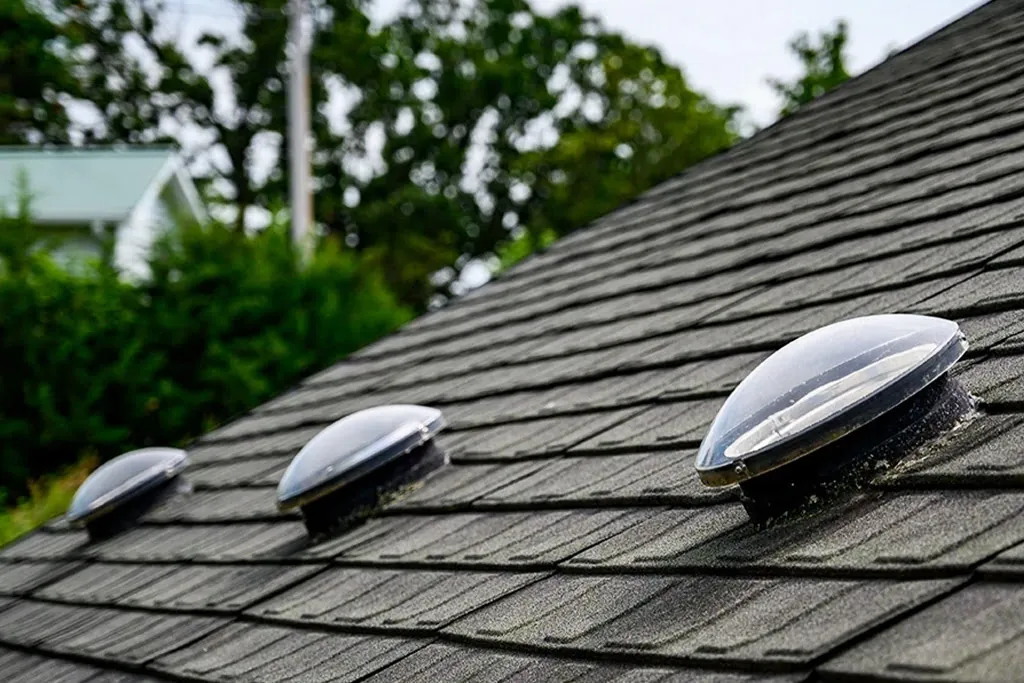
Skylights and gutters are located in different parts of the roofing system, but both contribute to effective water management.
Flashing directs water around a skylight and back onto the roofing surface.
The shingles then carry that water down the roof.
Eventually, the gutters need to collect it.
This creates a continuous drainage pathway:
Skylight flashing → roofing → gutters → downspouts → safe discharge
A weakness anywhere along that route can create moisture problems.
Consider Gutters During Roof Replacement
If your Ottawa home is approaching a roof replacement, have the gutters inspected as part of the project planning.
Roofing work may reveal issues involving:
- Fascia
- Roof edges
- Drip-edge components
- Existing gutter attachment
It can also be an appropriate time to evaluate skylights, soffit, fascia, attic ventilation, and drainage together rather than scheduling several unrelated projects.
Repair or Replace?
Not every gutter problem requires replacement.
Repair May Make Sense When:
- Damage is localized
- A few fasteners are loose
- One joint is leaking
- A downspout is blocked
- Minor alignment corrections are needed
- The rest of the system remains sound
Replacement May Be Worth Considering When:
- Multiple sections are sagging
- Gutters repeatedly pull away
- Leaks occur throughout the system
- Significant physical deterioration is present
- Drainage remains inadequate despite maintenance
- Repairs have become frequent
- The existing system cannot adequately handle roof runoff
A professional inspection can help determine which approach makes the most sense.
Don’t Wait Until Winter to Discover a Problem
A leaking gutter is much easier to investigate during a mild fall day than during freezing weather.
Once snow and ice arrive, access becomes more difficult and potentially dangerous.
Completing an inspection before winter gives homeowners time to:
- Remove debris.
- Flush downspouts.
- Test drainage.
- Repair loose components.
- Replace damaged sections where necessary.
- Evaluate fascia and soffit.
- Prepare the entire roofline for winter.
A Simple Fall Gutter Checklist for Ottawa Homeowners
Before winter arrives, check for:
- Leaves and debris
- Clogged downspouts
- Sagging gutters
- Loose hangers
- Leaking joints
- Cracks or holes
- Poor gutter slope
- Water stains on fascia
- Damaged soffit
- Downspouts draining too close to the home
- Water pooling near the foundation
- Signs of previous ice damage
Canada’s flood-prevention guidance recommends gutter and downspout maintenance at least twice annually, including fall, making this an excellent seasonal checklist to incorporate into regular home maintenance. (Canada)
Safety Comes First
Cleaning or inspecting gutters often involves ladders and working near roof edges.
Wet leaves, frost, ice, and snow can make these areas particularly dangerous.
Federal guidance recommends getting assistance or hiring a professional when gutter or roof maintenance cannot be completed safely. (Canada)
Homeowners should never risk a fall simply to inspect a difficult-to-reach section.
Think of Gutters as Part of the Complete Roofing System
Your home’s exterior protection depends on several components working together:
- Shingles shed precipitation.
- Skylight flashing manages water around roof openings.
- Soffit and attic vents support ventilation.
- Fascia protects and finishes the roof edge.
- Gutters collect runoff.
- Downspouts move that runoff away from the home.
Ignoring one component can sometimes create problems elsewhere.
A whole-system inspection can therefore be particularly valuable before Ottawa’s winter weather arrives.
Conclusion
Ottawa’s fall rain and winter snow can quickly reveal weaknesses in an aging gutter system. Overflow, sagging sections, leaking joints, standing water, loose fasteners, clogged downspouts, damaged fascia, and water pooling near the foundation are all signs that deserve attention.
Sometimes the solution is straightforward maintenance. Cleaning the gutters, clearing downspouts, repairing a localized leak, or correcting a minor alignment issue may restore proper drainage.
But when problems are widespread, repairs are becoming frequent, or a clean system still cannot manage roof runoff effectively, it may be time to consider an upgrade.
Preparing before winter is particularly important. Gutters that enter the season clean, secure, properly aligned, and able to drain freely are better prepared to manage rain, snowmelt, and changing temperatures.
By inspecting the complete roof drainage system—including gutters, downspouts, fascia, soffit, roofing, and related components—Ottawa homeowners can address small problems before harsh weather turns them into larger ones.