
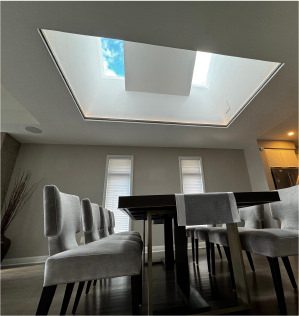
Skylights can completely change the atmosphere of a home by introducing natural light, improving visual comfort, and creating a stronger connection to the outdoors. For Ottawa homeowners, one of the most important decisions during a skylight project is choosing between a fixed skylight and a venting skylight.
Both options can provide excellent daylight, but they serve different purposes. Fixed skylights are designed primarily to brighten a space, while venting skylights add the ability to open for fresh air and natural ventilation.
The right choice depends on the room, roof structure, ventilation needs, budget, and how you want the space to function.
This guide explains the differences between fixed and venting skylights so homeowners in Ottawa, Kanata, Nepean, Barrhaven, Orleans, Gloucester, and Stittsville can make a more informed decision.
What Is a Fixed Skylight?
A fixed skylight is a non-opening skylight designed primarily to bring natural daylight into the home.
Because it does not open, its main advantages are simplicity, natural lighting, and a clean design.
Fixed skylights work especially well in rooms that already have adequate ventilation.
Common locations include:
- Living rooms
- Dining rooms
- Hallways
- Stairwells
- Home offices
- Open-concept spaces
For homeowners who want more daylight without additional ventilation, a fixed skylight can be an excellent choice.
What Is a Venting Skylight?
A venting skylight, sometimes called an operable or opening skylight, provides both natural light and fresh air.
It can be opened manually, electrically, or through solar-powered controls depending on the model.
Venting skylights are especially useful in spaces where heat, moisture, or stale air can build up.
Typical locations include:
- Kitchens
- Bathrooms
- Bedrooms
- Laundry rooms
- Upper-floor living spaces
- Rooms with vaulted ceilings
For Ottawa homeowners looking to improve both daylight and airflow, venting skylights offer additional functionality.
The Biggest Difference: Ventilation
The most obvious difference between the two options is airflow.
A fixed skylight remains sealed and provides daylight only.
A venting skylight opens and allows warm, humid air to escape.
Because warm air naturally rises, an opening at roof level can help improve natural air circulation.
This is particularly useful during warmer months when upper floors can become uncomfortable.
Why Fixed Skylights Are Popular
Fixed skylights are popular because they offer a straightforward way to brighten a room.
Homeowners often choose them because they provide:
- Abundant natural light
- Simple operation
- Clean appearance
- Fewer moving parts
- Strong weather protection when installed properly
They are well suited for areas where ventilation is already handled by windows, doors, or mechanical systems.
Why Venting Skylights Are Popular
Venting skylights provide added versatility.
In addition to daylight, they can help:
- Release warm air
- Reduce humidity
- Improve indoor air circulation
- Remove cooking heat and odors
- Increase comfort
This makes them particularly useful in rooms that regularly generate heat or moisture.
Fixed Skylights in Living Rooms
Living rooms are one of the best locations for fixed skylights.
If the room already has windows or doors that provide ventilation, a fixed skylight can be used primarily to improve natural light.
Benefits include:
- Brighter interiors
- More architectural interest
- Reduced daytime lighting needs
- A more open atmosphere
Larger living rooms may benefit from multiple fixed skylights to create more balanced daylight.
Venting Skylights in Kitchens
Kitchens generate significant heat and moisture.
Cooking can produce:
- Steam
- Heat
- Odors
- Humidity
A venting skylight allows warm air to escape naturally while bringing daylight into the space.
This can be especially effective in kitchens with high ceilings or limited wall ventilation.
Venting Skylights in Bathrooms
Bathrooms are another strong application for venting skylights.
They offer both privacy and ventilation.
A venting skylight can help release humidity after showers while bringing natural light into the room.
Benefits include:
- Improved airflow
- Reduced moisture buildup
- Greater natural light
- Better privacy than many wall windows
This combination makes venting skylights particularly attractive for interior bathrooms.
Fixed Skylights in Hallways and Stairwells
Hallways and stairwells often lack natural daylight but usually do not require additional ventilation.
Fixed skylights work well in these areas because they focus entirely on bringing light into otherwise dark spaces.
For smaller or more enclosed locations, a Sun Tunnel may also be worth considering.
Which Option Is Better for Bedrooms?
Bedrooms can benefit from either fixed or venting skylights.
A fixed skylight works well if natural light is the main goal and the room already has enough ventilation.
A venting skylight may be better if homeowners want:
- Fresh air
- Better summer ventilation
- Additional temperature control
Skylight shades can also improve privacy and help darken bedrooms when needed.
Energy Efficiency Considerations
Both fixed and venting skylights can be energy efficient when high-quality products are professionally installed.
Modern skylights may include:
- Insulated glazing
- Low-E coatings
- Improved weather seals
- Energy-efficient frames
- Professional flashing systems
Fixed skylights have fewer opening components, which can simplify air sealing.
Venting skylights are also designed for energy performance but rely on properly functioning seals when closed.
Natural Ventilation and Summer Comfort
One of the strongest advantages of venting skylights is their ability to support natural cooling.
During warm weather, hot air can collect near the ceiling.
Opening a venting skylight allows that air to escape.
When combined with lower windows, this can create a natural airflow pattern that helps make the room feel more comfortable.
For Ottawa homes with vaulted ceilings or upper-floor heat buildup, this can be particularly useful.
Smart Features Available with Venting Skylights
Modern venting skylights can offer convenient automation features.
Depending on the product, options may include:
- Remote controls
- Solar-powered operation
- Rain sensors
- Automated opening and closing
- Smart home connectivity
These features are especially helpful for skylights installed in high or difficult-to-reach areas.
Rain Sensors Add Peace of Mind
One concern homeowners sometimes have about venting skylights is leaving them open when rain begins.
Modern systems can address this with automatic rain sensors.
When rain is detected, the skylight can close automatically.
This allows homeowners to enjoy fresh air without constantly monitoring changing weather conditions.
Skylight Shades Work with Both Options
Both fixed and venting skylights can benefit from compatible shades.
Shades help control:
- Glare
- Brightness
- Privacy
- Solar heat gain
Light-filtering shades work well in living areas, while room-darkening shades may be more suitable for bedrooms or media spaces.
Maintenance Differences
Fixed skylights generally have fewer moving components.
This can make them relatively simple to maintain.
Venting skylights include operating hardware that should be checked periodically.
Maintenance may include:
- Testing opening mechanisms
- Checking seals
- Inspecting remote controls
- Testing rain sensors
- Cleaning tracks or hardware
Both skylight types still require periodic inspection of flashing and surrounding roofing materials.
Cost Considerations
Fixed skylights are generally simpler because they do not include opening mechanisms or automation.
Venting skylights may cost more because they can include:
- Mechanical hardware
- Motors
- Solar controls
- Remote systems
- Rain sensors
However, the added cost can be worthwhile in rooms where ventilation provides a meaningful benefit.
The decision should be based on function rather than price alone.
Roof Placement Matters
The performance of both fixed and venting skylights depends heavily on placement.
Professional installers consider:
- Roof orientation
- Room size
- Ceiling height
- Sun exposure
- Roof framing
- Ventilation needs
A properly positioned skylight can provide useful daylight without creating excessive glare or unwanted heat.
Roof Orientation Can Affect Your Choice
Different roof directions receive different sunlight throughout the day.
North-Facing Skylights
These generally provide softer and more consistent daylight.
South-Facing Skylights
These can receive more direct sunlight and may benefit from shades.
East-Facing Skylights
These typically receive stronger morning sunlight.
West-Facing Skylights
These can experience stronger afternoon light and heat.
Proper glazing and shade selection can help manage these conditions.
Fixed Skylights May Be Best When
A fixed skylight may be the right choice if:
- You primarily want more natural light
- The room already has good ventilation
- You prefer a simpler system
- You do not need the skylight to open
- The skylight is installed in a hallway or stairwell
For many living and dining areas, fixed skylights provide everything homeowners need.
Venting Skylights May Be Best When
A venting skylight may be the better choice if:
- The room becomes hot
- Humidity is a concern
- Fresh air is important
- The skylight is in a kitchen or bathroom
- You want natural ventilation
- You value smart automation
For rooms that produce heat or moisture, the added functionality can make a noticeable difference.
What About Sun Tunnels?
Some spaces do not require either a fixed or venting full-sized skylight.
Sun Tunnels, also known as Light Tunnels, can be ideal for:
- Closets
- Interior hallways
- Small bathrooms
- Laundry rooms
- Pantries
They bring daylight into compact spaces with a smaller roof opening.
They do not provide ventilation, but they can be highly effective for natural lighting.
Replacing an Existing Fixed Skylight
If you already have an older fixed skylight, replacement provides an opportunity to reconsider how the room is used.
If ventilation would improve the space, upgrading to a venting skylight may be worth exploring.
For example, a fixed skylight in a kitchen could potentially be replaced with an operable model if the roof structure and installation conditions allow it.
Replacing an Older Venting Skylight
Older venting skylights may eventually develop:
- Worn seals
- Difficult operation
- Drafts
- Failed hardware
- Condensation issues
Replacing an aging unit can provide access to modern glazing, improved seals, and updated controls.
Roof Replacement Is an Ideal Time to Evaluate Skylights
If you’re planning a roof replacement, it is a good time to inspect existing skylights.
Contractors have better access to:
- Roof decking
- Flashing
- Underlayment
- Skylight openings
This makes it easier to replace aging skylights and integrate new flashing with the new roofing system.
Why Professional Installation Matters
Whether you choose fixed or venting skylights, professional installation is essential.
A skylight becomes part of the roofing system, so proper installation must address:
- Waterproofing
- Flashing
- Roof integration
- Insulation
- Air sealing
- Interior finishing
Poor installation can lead to leaks, drafts, and premature failure regardless of the skylight type.
Choosing the Right Option Room by Room
There is no rule that every skylight in a home must be the same type.
Many Ottawa homeowners benefit from combining different solutions.
For example:
- Fixed skylights in the living room
- A venting skylight in the kitchen
- A venting skylight in the bathroom
- A Sun Tunnel in the hallway
This room-by-room approach can create a more effective daylighting and ventilation strategy.
Questions to Ask Before Choosing
Before deciding between fixed and venting skylights, consider:
- Does the room need additional ventilation?
- Is humidity a concern?
- Does heat accumulate near the ceiling?
- Is natural light the primary goal?
- Would remote controls be useful?
- Is privacy important?
- Would skylight shades improve comfort?
Answering these questions can make the decision much easier.
Which Skylight Is Right for Your Ottawa Home?
Neither fixed nor venting skylights are universally better.
The right choice depends on how the room is used.
Choose a fixed skylight when natural daylight is the main priority and additional ventilation is unnecessary.
Choose a venting skylight when you want natural light combined with fresh air, moisture control, and additional comfort.
For smaller interior areas, a Sun Tunnel may provide an even more practical solution.
Conclusion
Choosing between fixed and venting skylights comes down to the needs of your home and the function of each room. Fixed skylights provide a simple and effective way to bring natural light into living rooms, hallways, stairwells, and other spaces where ventilation is already adequate. Venting skylights add fresh air and moisture control, making them particularly useful in kitchens, bathrooms, bedrooms, and upper-floor spaces.
Modern skylights can also include energy-efficient glazing, shades, solar-powered operation, remote controls, rain sensors, and smart automation, giving Ottawa homeowners more control than ever before.
The best results come from evaluating each room individually and working with an experienced skylight professional who understands roof structure, daylighting, ventilation, and Ottawa’s seasonal climate.
With the right selection and professional installation, both fixed and venting skylights can create brighter, more comfortable, and more enjoyable living spaces for years to come.