
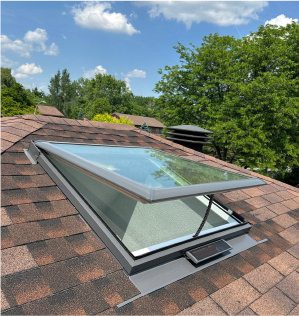
Upgrading attic insulation is one of the most practical ways to improve comfort and energy efficiency in a Nepean home. With Ottawa’s cold winters, humid summers, heavy snowfall, and changing seasonal temperatures, proper insulation helps reduce unwanted heat transfer and supports more consistent indoor temperatures.
However, before adding new insulation, homeowners should consider something equally important: attic ventilation.
Insulation and ventilation perform different functions, but they need to work together. While insulation slows heat transfer between living spaces and the attic, ventilation helps manage heat and moisture within a conventional vented attic.
If ventilation pathways are blocked or poorly designed, adding insulation without addressing those problems may leave existing moisture concerns unresolved or create additional airflow restrictions.
At Sunrise Skylights, we understand that a properly performing attic requires more than simply adding insulation. Air sealing, vapour control, soffit ventilation, rooftop ventilation, and roofing protection all contribute to the overall performance of a home.
Why Attic Ventilation Matters in Nepean
Attic ventilation allows outdoor air to move through designated openings in a vented roof assembly.
In many Nepean homes, cooler outdoor air enters through soffit vents near the eaves, while air exits through vents positioned higher on the roof.
This airflow helps manage attic conditions throughout the year.
Proper attic ventilation can help:
- Reduce excessive heat accumulation during summer.
- Manage moisture in the attic.
- Support the performance of the roof assembly.
- Reduce the likelihood of condensation under appropriate conditions.
- Maintain a functional airflow pathway beneath the roof.
However, ventilation is not a substitute for insulation or air sealing. All three need to be considered when evaluating attic performance.
Understanding the Difference Between Insulation and Ventilation
Homeowners sometimes assume that insulation and ventilation serve the same purpose.
They do not.
Attic insulation reduces heat transfer between the conditioned living space and the attic.
Attic ventilation helps exchange air between a vented attic and the outdoors.
Air sealing reduces uncontrolled airflow through gaps between the living space and attic.
For a well-performing attic, these systems should complement one another.
For example, an attic may have adequate insulation but still experience moisture problems if warm indoor air is escaping through unsealed ceiling penetrations.
Similarly, an attic with ventilation openings may perform poorly if insulation blocks the airflow pathways.
How Attic Ventilation Typically Works
Many residential attics use a combination of intake and exhaust ventilation.
Soffit Intake Ventilation
Soffit vents are commonly located underneath the roof overhang.
They allow outdoor air to enter the attic near the lower edge of the roof.
Rooftop Exhaust Ventilation
Exhaust vents are installed higher on the roof.
Depending on the roofing design, these may include ridge vents or other approved ventilation systems.
Continuous Airflow
When the system is designed correctly, air can move from the lower intake openings toward the upper exhaust openings.
The effectiveness of this arrangement depends on the roof geometry, vent placement, available net free ventilation area, and whether the pathways remain unobstructed.
Why Ventilation Should Be Checked Before Adding Insulation
When homeowners install new attic insulation, the material is often placed across the attic floor.
In conventional vented attics, this insulation may extend toward the eaves, where soffit intake vents are located.
Without proper preparation, new insulation can block these openings.
This can restrict airflow and reduce the effectiveness of the ventilation system.
Before installing insulation, homeowners should confirm that the attic has appropriate intake and exhaust ventilation and that the intended airflow pathways will remain clear.
Problem #1: Blocked Soffit Vents
Blocked soffit vents are among the most important concerns to check before an insulation upgrade.
Airflow restrictions can occur when:
- Existing insulation is pushed against the roof decking.
- Loose fill insulation covers intake openings.
- Ventilation baffles are missing.
- Debris accumulates near the eaves.
- Soffit panels are improperly installed.
If outdoor air cannot enter through the intended openings, the ventilation system may not operate as designed.
Adding more insulation without correcting these conditions can make the problem harder to access later.
Why Ventilation Baffles Are Important
Ventilation baffles, sometimes called attic chutes, help maintain an open passage for air near the eaves.
They are commonly installed between roof framing members.
Their purpose is to preserve the intended airflow path between soffit intake vents and the attic.
When loose fill blown fibre glass is installed, baffles can also help prevent insulation from spilling into areas that must remain open.
The correct baffle arrangement depends on the attic design and ventilation requirements.
Problem #2: Inadequate Rooftop Ventilation
Even when soffit intake vents are clear, the attic may not have an appropriate exhaust arrangement.
Air entering the attic needs a designed pathway to exit.
Problems can arise when rooftop vents are:
- Missing
- Damaged
- Obstructed
- Improperly positioned
- Inadequately sized for the attic
A professional assessment can determine whether the existing ventilation arrangement meets the requirements of the roof assembly.
Simply installing additional vents without evaluating the overall system is not always the right solution.
Problem #3: Poor Air Sealing Between the Home and Attic
Warm indoor air can escape into the attic through gaps in the ceiling assembly.
Common leakage locations include:
- Attic access hatches
- Plumbing penetrations
- Electrical openings
- Recessed lighting
- Interior wall transitions
- Duct penetrations
- Skylight shafts
During winter, this air can carry moisture into colder attic spaces.
If moisture reaches sufficiently cold surfaces, condensation may occur.
Adding insulation without correcting significant air leaks may leave this problem unresolved.
Why Air Sealing Should Come Before New Insulation
Air sealing is often easier to complete before additional insulation covers the attic floor.
Once the insulation is installed, gaps around ceiling penetrations may become difficult to locate.
A professional attic preparation process should therefore include identifying and addressing accessible air leakage pathways.
This helps limit unwanted heat and moisture movement between the living space and attic.
Problem #4: Excess Moisture in the Attic
Moisture problems should be investigated before installing new insulation.
Possible warning signs include:
- Damp insulation
- Water stains on roof decking
- Frost during cold weather
- Musty odours
- Visible mould-like growth
- Darkened wood surfaces
- Condensation around roof penetrations
These symptoms can result from several causes.
Potential sources include roof leaks, indoor air leakage, improperly terminated exhaust ducts, or ventilation problems.
The underlying cause should be identified and corrected before new insulation is added.
Why Moisture Can Become a Winter Problem
During Nepean’s cold winter months, attic surfaces can become very cold.
Warm, humid indoor air escaping into the attic may contact these surfaces.
Under the right conditions, moisture can condense or freeze.
When temperatures rise, accumulated frost may melt.
This can create water staining or damp insulation even when there is no direct roof leak.
Proper air sealing and moisture control are therefore essential parts of attic preparation.
Problem #5: Poorly Terminated Bathroom Exhaust Fans
Bathrooms generate considerable moisture during showers and bathing.
Bathroom exhaust fans should discharge humid air outdoors through an appropriately installed duct system.
If a fan releases moisture directly into the attic, it can contribute to condensation and other moisture problems.
Before installing insulation, homeowners should confirm that exhaust ducts are correctly connected and terminated.
New insulation should not conceal an improperly installed ventilation duct.
How Attic Insulation Supports Winter Comfort
Once the attic has been properly assessed and prepared, insulation can help reduce heat transfer through the ceiling assembly.
This may improve comfort in rooms directly below the attic.
Potential benefits include:
- More consistent indoor temperatures
- Reduced unwanted heat loss
- Less heating demand
- Improved comfort on upper floors
- Better overall thermal performance
The extent of these benefits depends on existing insulation levels, air leakage, and other conditions within the home.
Why Loose Fill Blown Fibre Glass Is Worth Considering
Loose fill blown fibre glass is commonly used for insulating residential attic floors.
Unlike pre-cut insulation batts, it is installed using specialized blowing equipment.
This allows the material to be distributed across open attic areas and around many irregular framing details.
When installed correctly, it can provide consistent thermal coverage.
However, the attic must be prepared first.
Air sealing, ventilation clearances, moisture concerns, and electrical safety should all be addressed before installation.
Can Blown Fiberglass Block Ventilation?
Yes, if it is installed incorrectly.
Loose fill insulation can move into soffit intake areas when appropriate containment or baffles are missing.
This is why professional installation matters.
The goal is to achieve the intended insulation depth without interfering with ventilation pathways.
Understanding Insulation R-Value
R-value measures resistance to heat flow.
Higher R-values generally indicate greater thermal resistance.
However, the correct insulation target depends on the existing attic assembly, applicable requirements, and the scope of the renovation.
The installed thickness required to achieve a particular R-value varies by product.
Homeowners should follow manufacturer specifications and professional recommendations rather than estimating insulation requirements by appearance alone.
Why Adding More Insulation Is Not Always the First Step
An attic may already have a reasonable amount of insulation but still perform poorly.
Possible reasons include:
- Air leakage
- Moisture damage
- Uneven coverage
- Blocked ventilation
- Thermal bridging
- Poorly insulated skylight shafts
In these situations, simply increasing insulation depth may not fully address the problem.
A complete assessment helps identify the most useful improvements.
Attic Ventilation and Ice Dams
Ice dams can develop when snow melts on warmer roof areas and refreezes near colder roof edges.
Heat escaping from the home into the attic can contribute to uneven roof temperatures.
Factors that may influence ice dam formation include:
- Inadequate insulation
- Air leakage
- Attic ventilation deficiencies
- Roof geometry
- Weather conditions
Improving insulation and air sealing can help reduce unnecessary heat movement toward the roof.
Ventilation may also contribute to maintaining appropriate attic conditions in a conventional vented assembly.
However, no single upgrade can guarantee that ice dams will never form.
Why Nepean Homes Need Winter Preparation
Ottawa-area winters can expose weaknesses in attic insulation and ventilation.
Homeowners may notice:
- Cold upper-floor rooms
- Uneven temperatures
- Frost in the attic
- Repeated ice accumulation
- Condensation near roof openings
- Higher heating demand
These symptoms should prompt an evaluation of the entire attic system.
Attic Ventilation During Summer
Ventilation also matters during warmer weather.
Solar energy heats the roof surface, and some of that heat reaches the attic.
In a conventional vented attic, appropriate ventilation can help release accumulated warm air.
Insulation helps resist heat transfer from the attic into the living space.
Together, these systems support better seasonal performance.
Why Roof Condition Should Be Checked First
Before installing new insulation, the roof should be evaluated for signs of water intrusion.
Potential problem areas include:
- Damaged shingles
- Deteriorated flashing
- Roof vents
- Plumbing penetrations
- Skylight openings
- Roof valleys
If water is entering the attic, the source should be repaired before adding insulation.
Otherwise, new material may become wet or conceal ongoing deterioration.
Skylights and Attic Ventilation
Homes with skylights may have additional details that require attention.
Some skylights connect to the interior through shafts that pass through the attic.
These shafts should be appropriately insulated and air sealed.
Poorly insulated skylight shafts can create cold surfaces and contribute to unnecessary heat transfer.
Air leakage around the shaft may also introduce moisture into the attic.
A complete attic assessment should consider these areas.
Why Skylight Condensation Is Not Always a Roof Leak
Condensation around a skylight may result from indoor humidity contacting a cold surface.
In some cases, inadequate shaft insulation or air leakage can contribute to the problem.
However, water intrusion from damaged flashing or roofing is also possible.
A professional inspection can help distinguish between condensation and an exterior leak.
Adding attic insulation without diagnosing the moisture source may not solve the problem.
The Role of Soffit and Fascia
Soffit and fascia are important components along the roof edge.
Vented soffit may provide intake airflow for the attic.
Fascia protects and finishes the roof edge and often supports the gutter system.
If soffit panels are damaged or ventilation openings are obstructed, attic airflow may be affected.
Homeowners planning an insulation upgrade should consider having these components inspected as well.
Should You Add More Roof Vents?
Not automatically.
Adding vents without understanding the existing airflow pattern can sometimes create unintended ventilation paths.
The correct number, type, and placement of vents depend on the roof design.
A professional should evaluate the system before recommending additional ventilation.
Signs Your Attic Ventilation May Need Attention
Nepean homeowners should consider an inspection if they notice:
- Persistent attic moisture
- Frost on roof decking
- Blocked soffit vents
- Excessive summer attic heat
- Repeated winter condensation
- Damaged roof vents
- Insulation covering intake openings
- Evidence of inadequate airflow
These signs do not necessarily prove that ventilation is the sole cause, but they justify further investigation.
How a Professional Attic Assessment Works
A professional evaluation may include several steps.
Step 1: Inspect Existing Insulation
The current insulation depth, coverage, and condition are reviewed.
Step 2: Evaluate Air Leakage
Accessible ceiling penetrations and attic openings are checked for possible air leakage.
Step 3: Inspect Soffit Ventilation
Intake openings are evaluated for blockages and appropriate airflow pathways.
Step 4: Check Rooftop Ventilation
Existing exhaust vents are reviewed for condition and suitability.
Step 5: Look for Moisture Problems
Roof decking, insulation, and framing are checked for signs of moisture.
Step 6: Review Skylight and Roof Penetrations
Areas around skylights, vents, and other roof openings are evaluated.
Step 7: Plan Insulation Improvements
Once necessary repairs and preparation are identified, an appropriate insulation strategy can be developed.
Common Mistakes to Avoid During Attic Insulation Upgrades
Installing Insulation Over Moisture Problems
Wet or damaged materials should be assessed before adding new insulation.
Blocking Soffit Openings
Ventilation pathways must remain clear.
Ignoring Air Leakage
Insulation does not automatically stop warm, humid indoor air from entering the attic.
Assuming More Roof Vents Are Always Better
Ventilation should be designed for the specific attic.
Forgetting Skylight Shafts
Uninsulated or poorly sealed shafts can remain weak points.
Covering Electrical Components Improperly
Certain fixtures and equipment require appropriate clearances or protective measures.
When Is the Best Time to Upgrade Attic Insulation?
Fall is a practical time to schedule an attic assessment because it allows homeowners to address concerns before winter.
However, insulation improvements can be completed at other times when attic conditions permit.
It may also be convenient to coordinate attic work with:
- Roof replacement
- Skylight replacement
- Soffit repairs
- Fascia replacement
- Roof ventilation upgrades
Combining related work can help ensure that the systems are evaluated together.
Frequently Asked Questions
1. Should attic ventilation be checked before adding insulation?
Yes. In a conventional vented attic, intake and exhaust ventilation should be evaluated before installing additional insulation.
2. Can too much insulation block attic airflow?
Insulation depth itself is not necessarily the problem. Incorrect placement can obstruct soffit intake openings or other required ventilation pathways.
3. Does attic insulation replace ventilation?
No. Insulation reduces heat transfer, while ventilation helps manage conditions in a vented attic.
4. Can poor attic ventilation cause condensation?
Inadequate ventilation can contribute to moisture problems, but air leakage, indoor humidity, roof leaks, and exhaust duct problems may also be responsible.
5. Is blown fiberglass suitable for Nepean homes?
It can be a practical option for many conventional attic floors when installed correctly and when the attic assembly is suitable.
6. Will adding insulation stop ice dams?
Improved insulation and air sealing can help address contributing factors, but ice dams also depend on weather, roof design, and other conditions.
7. Should soffit vents remain open during winter?
In a conventional vented attic, designed ventilation pathways should generally remain unobstructed year-round.
8. Can skylights affect attic insulation performance?
Yes. Skylight shafts passing through an attic need appropriate insulation and air sealing to maintain the building’s thermal boundary.
Conclusion
For Nepean homeowners planning an attic insulation upgrade, checking ventilation before installation is an important step.
Proper insulation can help reduce heat loss during winter and limit unwanted heat transfer during summer. However, insulation performs best when the surrounding attic assembly has been properly prepared.
Blocked soffit vents, inadequate exhaust ventilation, uncontrolled air leakage, moisture problems, and poorly insulated skylight shafts should be evaluated before new material is installed.
A complete approach considers air sealing, vapour control, insulation, soffit ventilation, rooftop ventilation, and roofing protection as connected parts of the home.
At Sunrise Skylights, we help homeowners in Nepean, Ottawa, Kanata, Barrhaven, Gloucester, Orléans, and Stittsville with attic insulation, ventilation, skylight, and roofing solutions designed to support better home performance throughout the year.
Call: 613-716-8421 Email: info@sunriseskylights.ca Website: www.sunriseskylights.ca