Replacing a roof is one of the most significant exterior projects a homeowner will undertake. It protects the structure from rain, snow, ice, wind, and Ottawa’s dramatic seasonal temperature changes. But for Barrhaven homeowners who already have skylights, planning a roof replacement should involve more than choosing new shingles.
The condition of existing skylights deserves attention before the roofing project begins.
A skylight may look perfectly acceptable from inside the home while its flashing, seals, frame, glazing, or surrounding roofing components are showing signs of age. If those issues are overlooked and a new roof is installed around an aging skylight, homeowners may eventually need to disturb sections of their relatively new roofing system to replace the skylight later.
Inspecting skylights before reroofing allows homeowners and contractors to make informed decisions, coordinate both systems properly, and reduce the likelihood of avoidable problems after the new roof is complete.
Your Roof and Skylights Work as One System
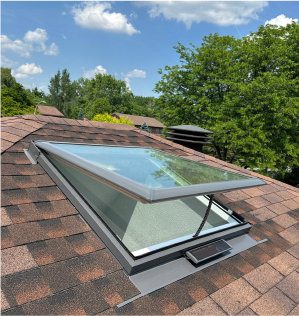
A skylight is not simply a window sitting on top of a roof.
It becomes part of the complete roofing assembly.
A properly installed skylight works together with:
- Shingles
- Roof decking
- Underlayment
- Flashing
- Insulation
- Air sealing
- Interior finishing
Water needs to travel down the roof and around the skylight without entering the roof opening.
That means the performance of the skylight depends partly on how effectively it is integrated with the surrounding roofing materials.
When replacing the roof, it makes sense to evaluate everything that penetrates it.
Why Timing the Inspection Before Reroofing Matters
Once a new roof is installed, homeowners generally expect it to remain undisturbed for many years.
Imagine replacing the shingles while keeping an aging skylight, only for that skylight to develop problems a few years later.
Replacing it could require contractors to work around newly installed roofing materials.
Assessing the skylight beforehand gives homeowners an opportunity to decide whether it should:
- Remain in place
- Receive appropriate repairs
- Have its flashing renewed
- Be replaced along with the roof
Making that decision before roofing begins can simplify the overall project.
An Older Skylight May Outlive the Existing Roof—or It May Not
The roof and skylights do not necessarily age at exactly the same rate.
A skylight may have been installed:
- When the house was built
- During a previous roof replacement
- As part of a renovation
- Several years after the current roof
Therefore, homeowners should not assume that because the skylight is currently functioning, it automatically makes sense to reinstall roofing around it.
Its age, condition, performance, and remaining service life should all be considered.
Look for Evidence of Water Intrusion
One of the first things to investigate is whether there have been any signs of moisture around the skylight.
Check the interior for:
- Brown or yellow ceiling stains
- Peeling paint
- Bubbling drywall
- Damp trim
- Musty odours
- Water marks around corners
- Moisture after heavy rainfall
Even if the area is currently dry, old staining can indicate that a problem occurred previously.
The source should be identified before the new roof is installed.
Not Every Skylight Leak Comes From the Skylight
This distinction is important.
Water appearing beside a skylight can originate from:
- Damaged flashing
- Deteriorated shingles
- Roofing problems higher up the slope
- Underlayment issues
- Condensation
- Ice or snow conditions
A professional inspection can help distinguish between a skylight failure and a surrounding roofing problem.
That diagnosis becomes particularly useful when the roof is already scheduled for replacement.
Inspect the Flashing Carefully
Flashing is essential to protecting the roof opening around a skylight.
Its purpose is to guide rain and snowmelt safely around the skylight and back onto the roofing surface.
Over time, flashing can become damaged or may have been incorrectly installed during previous work.
Potential concerns include:
- Bent components
- Improper overlaps
- Corrosion
- Loose sections
- Excessive reliance on exposed sealant
- Poor integration with shingles
When reroofing, the flashing system deserves careful evaluation rather than automatically being reused.
Why New Roofing and Proper Flashing Should Work Together
Roof replacement provides an opportunity to establish clean integration between the skylight, underlayment, flashing, and new shingles.
Instead of treating the skylight as an obstacle that needs to be worked around, it should be considered part of the roofing plan.
Correct integration helps water move naturally down the roof while protecting the vulnerable opening beneath the skylight.
This is particularly important in Barrhaven, where the roofing system must deal with rain, snow, ice, and repeated freeze-thaw cycles.
Check the Glass for Fogging
Look closely at the skylight glazing before reroofing.
If persistent cloudiness or moisture is trapped between the panes, the insulated glazing seal may have deteriorated.
Unlike surface condensation, this moisture cannot simply be wiped away.
Common symptoms include:
- Permanent haze
- Fogging between panes
- Cloudy glass
- Visible moisture inside the glazing unit
If an aging skylight already has failed glazing, installing a new roof around it without considering replacement may not be the best long-term approach.
Check for Drafts
A skylight may remain watertight while performing poorly thermally.
On colder days, homeowners may notice:
- Drafts around the skylight
- A particularly cold area beneath it
- Significant temperature differences near the opening
- Discomfort in the room
The problem could involve the skylight, seals, surrounding insulation, or air sealing.
A pre-roof inspection creates an opportunity to investigate these concerns.
Consider Energy Performance
Skylight technology has improved considerably.
Modern units can offer features such as:
- Insulated glazing
- Low-E coatings
- Improved seals
- Better thermal performance
- Compatible shades
- Solar-powered operation
If an existing skylight is significantly older, roof replacement provides a logical opportunity to compare its performance with newer options.
Homeowners do not necessarily need to replace every older skylight, but understanding the available improvements helps them make an informed decision.
Evaluate the Skylight Frame
The frame should also be inspected for signs of deterioration.
Watch for:
- Cracks
- Warping
- Visible damage
- Moisture staining
- Deteriorated finishes
- Loose components
Any structural or material deterioration should be assessed before new roofing is installed around the unit.
Does the Skylight Still Operate Properly?
For venting skylights, operation is another important consideration.
Test whether the unit:
- Opens smoothly
- Closes completely
- Seals properly
- Responds correctly to controls
If the skylight is difficult to operate or no longer closes securely, the upcoming roof replacement may be the right time to consider an upgrade.
Fixed vs. Venting: Is Your Existing Skylight Still Right for the Room?
A roof replacement can also be an opportunity to reconsider functionality.
Perhaps the existing fixed skylight provides good daylight, but the room would benefit from additional ventilation.
Venting skylights can be useful in areas such as:
- Kitchens
- Bathrooms
- Bedrooms
- Upper-floor living spaces
Because warm air rises, an operable skylight can provide an additional pathway for releasing accumulated warm air when outdoor conditions are suitable.
Consider Smart and Solar-Powered Features
Older skylights may require manual operation, which can be inconvenient when the unit is positioned high above the floor.
Modern options may include:
- Remote operation
- Solar-powered controls
- Rain sensors
- Automated shades
- Smart functionality
For homeowners already investing in a roof replacement, it may be worth considering whether these features would improve everyday convenience.
Inspect Skylight Shades Too
Skylight shades can play an important role in controlling:
- Brightness
- Glare
- Privacy
- Solar heat
- Bedroom darkness
If an older skylight has damaged or outdated shades, replacement provides an opportunity to select a new system that better suits the room.
This is especially useful for bedrooms and living areas receiving strong direct sunlight.
Examine the Roof Deck Around the Skylight
Once roofing materials are removed, contractors may be able to see conditions that were previously hidden.
The roof deck surrounding a skylight should be checked for signs of moisture damage or deterioration.
Problems can sometimes develop beneath the roofing surface long before homeowners notice obvious interior symptoms.
If damaged decking is discovered, it should be properly addressed before the new roof and skylight components are completed.
Underlayment Is Another Important Layer
Shingles are the most visible part of the roof, but they are not the only defence against moisture.
Underlayment provides additional protection beneath the roofing materials.
Around roof penetrations such as skylights, proper waterproofing is especially important.
A reroofing project provides an opportunity to ensure the new underlayment is correctly integrated around the skylight opening.
Don’t Forget Insulation Around the Skylight Shaft
Homeowners often focus on exterior roofing components, but the interior side of the skylight matters too.
Poor insulation around the skylight shaft can contribute to:
- Cold surfaces
- Drafts
- Heat loss
- Condensation
If homeowners have experienced recurring winter moisture or discomfort around the skylight, the insulation and air sealing should be investigated.
Replacing the roof without addressing these issues may leave the underlying comfort problem unresolved.
Barrhaven Winters Put the Entire System to the Test
Skylights and roofs in Barrhaven need to perform through challenging winter conditions.
Snow can accumulate on the roof, temperatures can fluctuate around freezing, and melting water can refreeze.
This makes good roofing practices particularly important around penetrations.
A coordinated system involving proper roofing, flashing, underlayment, insulation, and attic ventilation provides stronger protection than addressing each component independently.
Roof Ventilation Should Be Evaluated Too
While planning a roof replacement, homeowners should consider the attic ventilation system.
Proper ventilation can help manage heat and moisture within the attic.
Components may include:
- Soffit intake ventilation
- Roof or ridge vents
- Clear ventilation pathways
Poor attic ventilation can contribute to moisture problems and uncomfortable upper-floor temperatures.
Because skylights pass through the roof and potentially the attic space, these systems should be considered together.
Gutters and Drainage Matter as Well
A successful roof replacement is not only about shingles.
Rainwater and snowmelt must eventually leave the roof efficiently.
Gutters and downspouts should be inspected for:
- Blockages
- Sagging
- Damage
- Loose connections
- Poor drainage
Keeping water moving away from the roof and home is part of protecting the overall building envelope.
Should You Replace a Skylight That Isn’t Leaking?
Not necessarily.
A skylight that is in excellent condition, performs well, and is compatible with the new roofing system may not require replacement simply because the shingles are being changed.
However, homeowners should consider several factors:
- Age
- Glazing condition
- Energy performance
- Frame condition
- Operational performance
- Previous leaks
- Flashing condition
- Expected remaining service life
The decision should be based on the complete picture.
When Replacement May Be Worth Considering
Replacement may make more sense if the existing skylight has:
- Persistent fogging between panes
- Repeated leak history
- Significant frame deterioration
- Damaged glazing
- Poor thermal performance
- Difficult operation
- Recurring drafts
- Multiple aging components
Coordinating replacement with reroofing can be more practical than waiting until the new roof is already complete.
Consider Adding a Skylight During Roof Replacement
Homeowners without an existing skylight—or those renovating another room—can also use reroofing as an opportunity to explore adding one.
Potential locations include:
- Kitchens
- Bathrooms
- Stairwells
- Hallways
- Bedrooms
- Living rooms
Because roofing materials are already being replaced, the new opening and flashing can be integrated as part of the overall project.
Structural conditions still need to be evaluated before installation.
Sun Tunnels Can Be Considered at the Same Time
Not every dark area needs a traditional skylight.
Sun Tunnels can be useful for bringing natural daylight into compact or enclosed spaces where a conventional skylight may not be practical.
Common locations include:
- Hallways
- Closets
- Bathrooms
- Laundry rooms
- Interior corridors
Barrhaven homeowners planning a new roof may want to identify dark areas of the home before the project begins and discuss whether a daylighting solution could be incorporated.
Why Planning Ahead Can Reduce Disruption
Coordinating skylight work with roofing has another practical advantage.
Instead of scheduling separate exterior projects, homeowners may be able to address related work within the same overall renovation period.
This can reduce the likelihood of:
- Reopening completed roof areas
- Disturbing newer shingles
- Repeating certain preparation work
- Discovering an aging skylight immediately after reroofing
Good planning before construction begins is often easier than solving compatibility problems afterward.
Questions to Ask Before Your Barrhaven Roof Replacement
Before roofing work starts, homeowners with skylights should ask:
- How old are my existing skylights?
- Is there evidence of previous leaking?
- Is the flashing in good condition?
- Is there fogging between the glass panes?
- Are there drafts around the opening?
- Does the skylight open and close correctly?
- Is the surrounding roof deck sound?
- Is the skylight shaft properly insulated?
- Would modern glazing improve performance?
- Should the skylight be replaced while the roof is already being replaced?
These questions can help homeowners make decisions based on long-term performance rather than appearance alone.
Why Professional Skylight Inspection Is Valuable
Skylight problems are not always obvious from inside the house.
A professional can evaluate both the skylight and its relationship with the surrounding roofing system.
An inspection may consider:
- Glazing
- Frame
- Flashing
- Shingles
- Underlayment
- Roof deck
- Insulation
- Interior moisture signs
- Skylight operation
- Roof pitch and installation conditions
This broader approach is important because many apparent skylight problems actually originate elsewhere in the roofing system.
Think Beyond the New Shingles
A beautiful new roof can dramatically improve a home’s protection and exterior appearance.
But replacing shingles without evaluating existing roof penetrations can leave older components behind within an otherwise renewed system.
Skylights deserve particular attention because they affect both the exterior roof and interior living environment.
A little planning before reroofing can help homeowners determine which components should remain and which should be upgraded.
Conclusion
For Barrhaven homeowners preparing for a roof replacement, inspecting existing skylights beforehand is a smart part of the planning process.
The inspection can reveal problems involving flashing, glazing, frames, insulation, underlayment, roof decking, or previous moisture intrusion before new roofing materials are installed. It also provides an opportunity to evaluate whether an aging skylight should remain, be repaired, or be replaced with a newer energy-efficient model.
Homeowners can also explore upgrades such as venting skylights, modern glazing, shades, remote controls, solar-powered features, or even new Sun Tunnels for darker areas of the home.
Most importantly, coordinating skylight and roofing work helps ensure that both systems are designed to function together. For a home exposed to Barrhaven’s rain, snow, ice, summer heat, and freeze-thaw conditions, that coordinated approach can provide better protection, comfort, and confidence in the finished project.